

Chopping onions at the end of a long caregiving day is one of those small things that can wear you right down. Your wrists ache, your eyes water, and by the time the vegetables are done you have lost half your energy for cooking the actual meal. Most people either push through it or quietly start skipping the fresh vegetables altogether, which is a shame, because the food suffers and so does the person eating it.
The fix is not a heavy full-size food processor that takes up half the counter and needs three minutes of assembly just to chop one onion. The fix is a compact 3-cup mini chopper that sits on the shelf, takes ten seconds to set up, and handles onions, garlic, carrots, celery, and fresh herbs in under a minute each. The Hamilton Beach 3-Cup Electric Vegetable Chopper is budget-friendly, has a 4.6-star rating from over 36,000 buyers, and has become one of the most-used tools in my kitchen. This guide walks you through exactly how to use it so you get fast, even chops without any knife fatigue.
Your wrists deserve a break. This affordable chopper does the hard part for you.
The Hamilton Beach 3-Cup mini chopper is one of the top-rated compact kitchen tools on Amazon, with 36,000-plus reviews and a 4.6-star average. If dinner prep is feeling harder than it used to, this is a gentle, affordable change that makes a real difference.
Amazon Check Today's Price on Amazon →Step 1: Cut Vegetables Into Rough Chunks Before They Go In
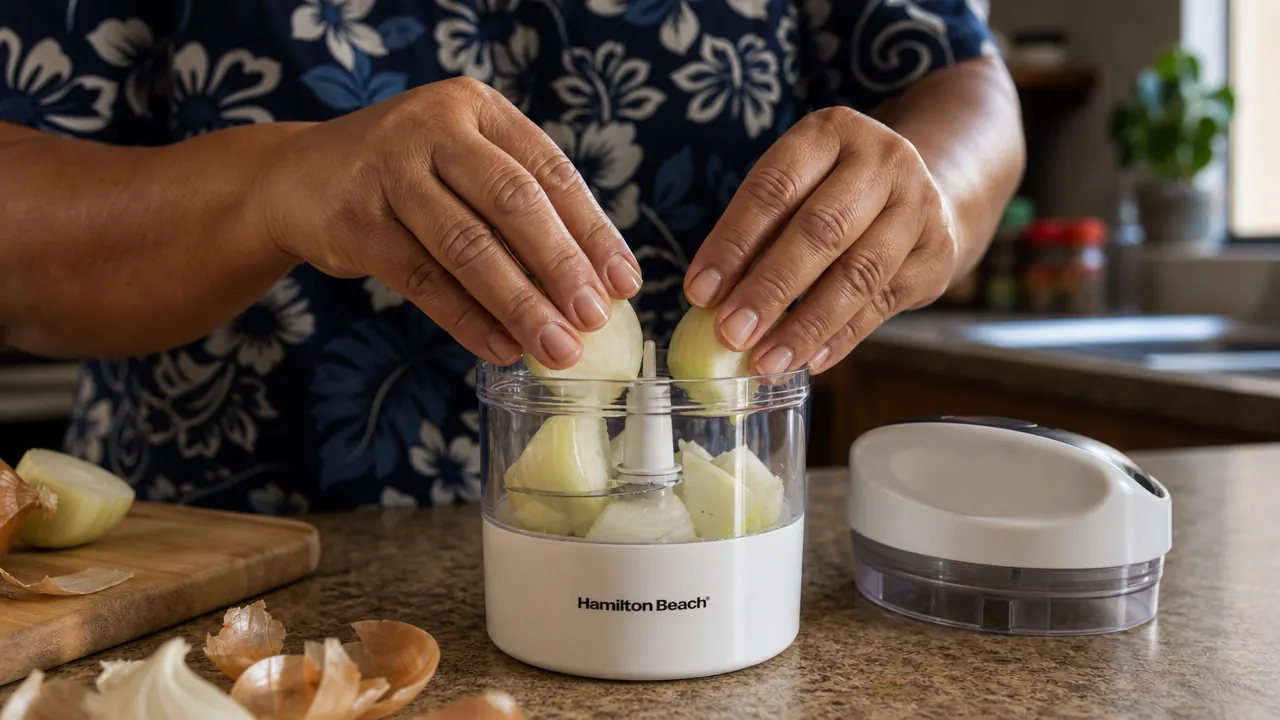
The Hamilton Beach chopper works best when you give it a head start. You do not need to dice anything finely by hand, but a whole onion or a whole carrot straight in will not chop evenly. Use a single knife cut or two to break each vegetable into rough pieces, about one to two inches across. For onions, cut them in half and then quarter each half. For carrots, cut them into rounds or small sticks. For garlic cloves, just peel them and drop them in whole.
This pre-cut step takes about thirty seconds per vegetable and it is genuinely all the knife work you need. You are not mincing, you are not dicing. You are just making pieces small enough that the blade can reach everything in the bowl. The chopper takes over from there. If you have tired hands or some arthritis, this step is much easier than a full chop because you are just making one or two rough cuts rather than a hundred fine ones.
Step 2: Load the Bowl to the Right Level
The 3-cup bowl is the right size for most one or two-person cooking tasks. For best results, fill the bowl about halfway to two-thirds full. Overfilling is the most common reason people get uneven results. When the bowl is too full, the pieces on top stay large while the pieces near the blade get over-processed. Half to two-thirds full gives everything room to tumble and makes contact with the blade evenly.
If you are prepping more than one cup of a single vegetable, do it in two small batches rather than one large one. With the chopper, two quick batches take less time than hand-chopping one large pile, and cleanup is the same either way. For very hard vegetables like raw beets or dense butternut squash, stick to small chunks and work in batches. Softer vegetables like mushrooms, zucchini, and fresh herbs need even less room because they reduce quickly.
Step 3: Lock the Lid and Pulse in Short Bursts
The Hamilton Beach chopper has a simple one-piece press-down lid that also acts as the power button. You do not twist a lock or hunt for an on switch. You just press the lid down and the blade runs. Release, it stops. This design is genuinely easy on arthritic or tired hands because you are using your palm rather than a grip or a twist. The lid stays in place with a straight downward press, which most people find more comfortable than rotary locks on other mini choppers.
For the actual chopping, use short pulses rather than holding the lid down continuously. Two to three one-second pulses, then check the texture. For a coarse chop on onions or carrots, three or four pulses is usually enough. For a finer mince on garlic or herbs, five to eight short pulses gets you there. Pulsing instead of running continuously gives you control over the final texture and prevents things from turning into a paste when you wanted a dice. Think of it as tapping, not pressing and holding.
Step 4: Match the Pulse Count to the Vegetable
Different vegetables chop at different speeds in the same machine. Once you know the rough pulse counts, prep becomes predictable and fast. Here is what I use consistently in my own kitchen for the Hamilton Beach 3-Cup at the half-full level.
Onions (coarse chop for stews or stir-fry): 3 to 4 one-second pulses. Check after 3. Onions (finer dice for soups or sauces): 5 to 6 pulses. Garlic cloves (minced fine): 4 to 5 pulses, or until no large chunks remain. Fresh herbs like parsley or cilantro: 3 to 4 pulses. They go fast and turn to paste easily if you over-pulse. Carrots (coarse): 5 to 6 pulses. They are denser and take a bit more. Celery: 3 to 4 pulses. Mushrooms: 2 to 3 pulses. They are soft and release moisture quickly. Ginger (fresh, peeled): 4 to 5 pulses. Cut into small coins first.
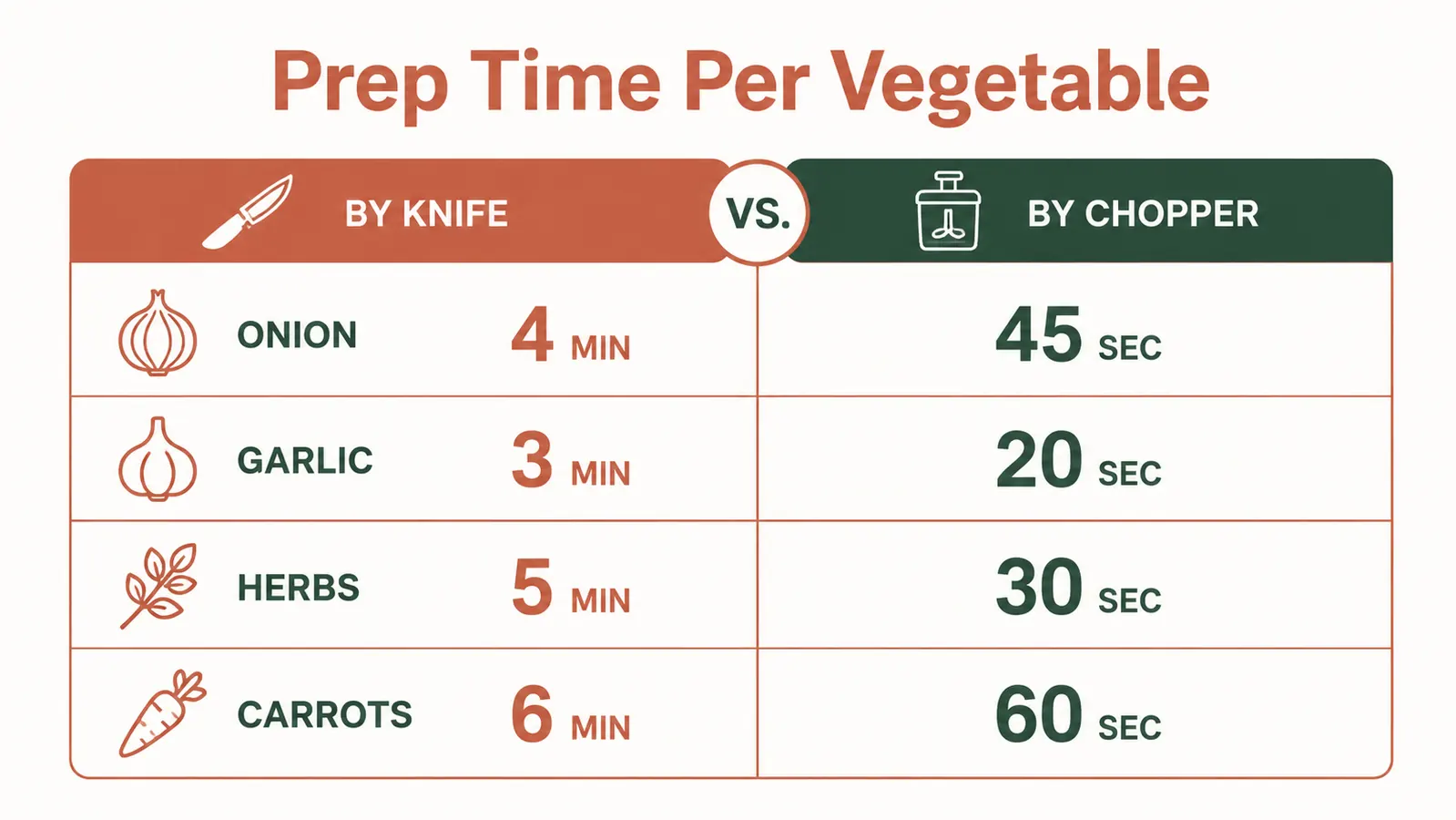
These counts are starting points, not rules. Your machine and your vegetable sizes will vary a little. The habit to build is: pulse twice, lift the lid, check, pulse again if needed. It adds two seconds but it means you never end up with mush when you wanted a chop.
Three pulses on an onion and it is done. I used to spend four minutes at the cutting board on just that one vegetable. Now I use that time to get the pan hot.
Step 5: Rinse the Bowl and Blade Right Away
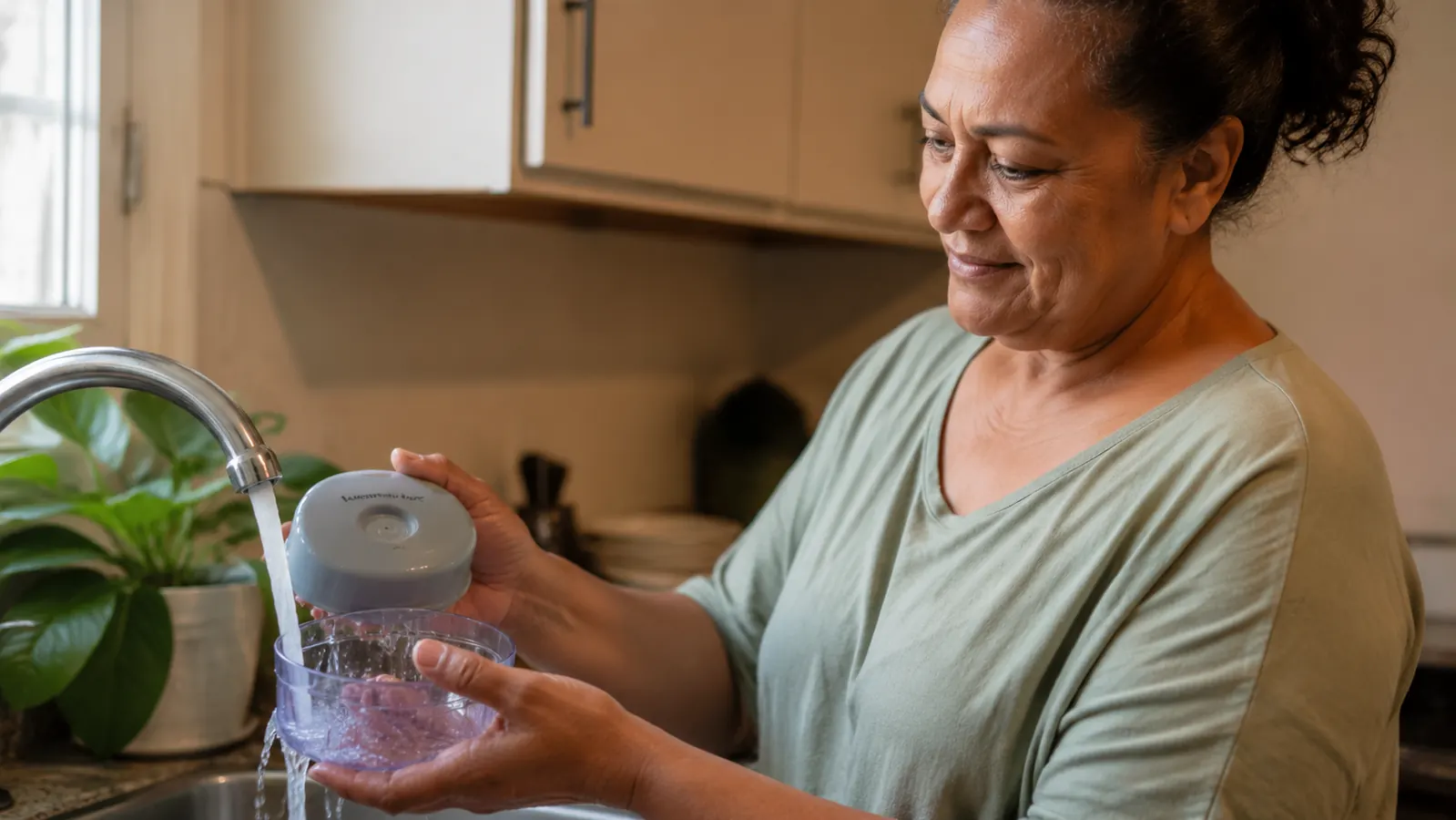
The single best habit with any food chopper is to rinse the bowl and blade immediately after emptying it. Onion and garlic residue sticks fast if it dries, and the blade is sharp enough that scrubbing a stuck bowl later is both harder and less safe. Thirty seconds under running water right after you empty the contents is all you need for everyday vegetables. The bowl and lid are top-rack dishwasher safe, and the blade can go in the dishwasher too, though I always place it spine-down in the utensil basket so the edge is not exposed.
The chopper body itself just needs a damp wipe on the outside. There is no complicated base to take apart, no removable gaskets, no hidden crevices where food gets trapped. For anyone who has dealt with a full-size food processor that requires ten minutes to disassemble and clean, this is a real relief. The total cleanup from prep to clean bowl is under two minutes on a normal day.
How to Batch Prep Vegetables for the Whole Week
Once you are comfortable with the pulse method, batch prepping on Sunday or Monday morning becomes very practical with the Hamilton Beach chopper. A typical week of vegetables for one or two people, onions, garlic, carrots, celery, and a fresh herb or two, takes about twelve to fifteen minutes total from start to clean bowl. That includes rinsing between each vegetable so the flavors do not mix. Store each chopped vegetable in a small lidded container in the refrigerator. Onions and garlic keep well for three to four days. Carrots and celery keep five days or more. Fresh herbs are best used within two days once chopped.
With a week of pre-chopped vegetables in the fridge, weeknight cooking gets much calmer. The prep work is already done and dinner can go from cold pan to table in twenty minutes rather than forty. For anyone cooking for an elderly parent or a person with a restricted diet, having vegetables ready also means it is easier to make small, quick meals exactly to order without a lot of additional effort each time.

What Else Helps Alongside the Chopper
A few small habits make the Hamilton Beach chopper even easier to use day to day. Keep it on the counter rather than in a cabinet. It is compact enough to sit in front of the backsplash without crowding the workspace, and when it is visible and accessible you actually use it instead of reaching for the knife out of habit. A small damp cloth or paper towel folded next to the sink makes the quick rinse even faster. And keeping a set of small prep bowls nearby means you can go from chopped to bowl to pan in a smooth sequence with no extra steps.
If you find the chopper useful for vegetables, it also handles nuts for topping oatmeal or salads, hard cheeses in small amounts, and cooked meats for quick sandwich fillings or casseroles. You do not need a separate gadget for those tasks. The same three-cup bowl handles all of it, and the cleanup is the same thirty-second rinse.
For a closer look at how the machine performs over months of regular use, the full review of the Hamilton Beach 3-Cup chopper covers durability, blade sharpness over time, and what it handles best. If you are weighing it against another popular option, how the Hamilton Beach compares to the Cuisinart Mini Prep walks through the differences in lid design, capacity, and cleanup so you can decide which fits your kitchen better.
Ready to spend less time chopping and more time actually cooking?
The Hamilton Beach 3-Cup chopper is budget-friendly, takes up almost no counter space, and cuts vegetable prep time down to under a minute per ingredient. Over 36,000 buyers have rated it 4.6 stars. Check the current price on Amazon and see if it is still in stock.
Amazon Check Today's Price on Amazon →