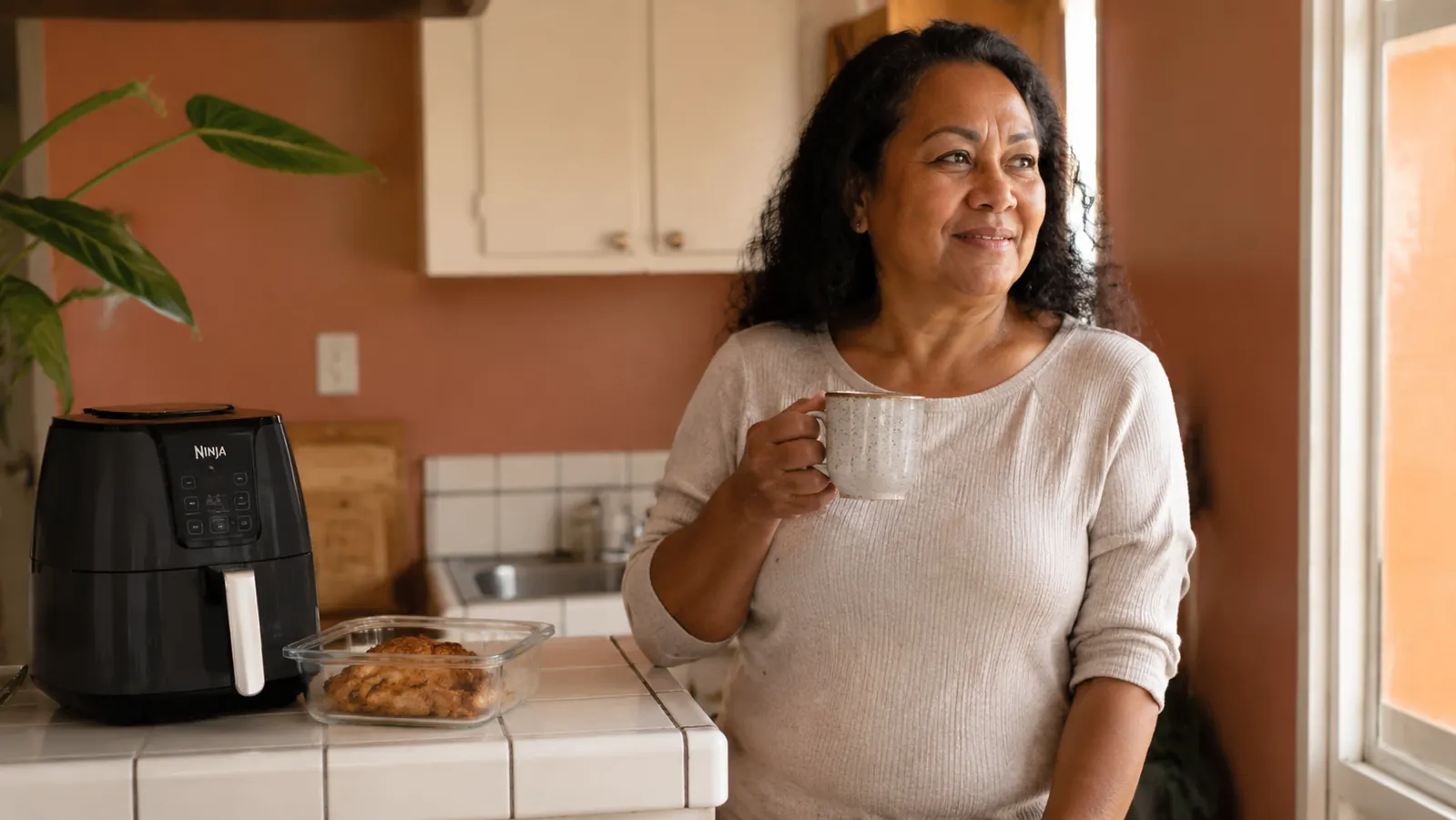
I used to hate leftover night. Not because the food was bad the first time around, but because the microwave turned everything rubbery or soggy, and I would end up picking at it without much enthusiasm before giving up and just making something fresh. That meant more dishes, more standing in the kitchen when I just wanted to sit down, and more food quietly going to waste in the fridge.
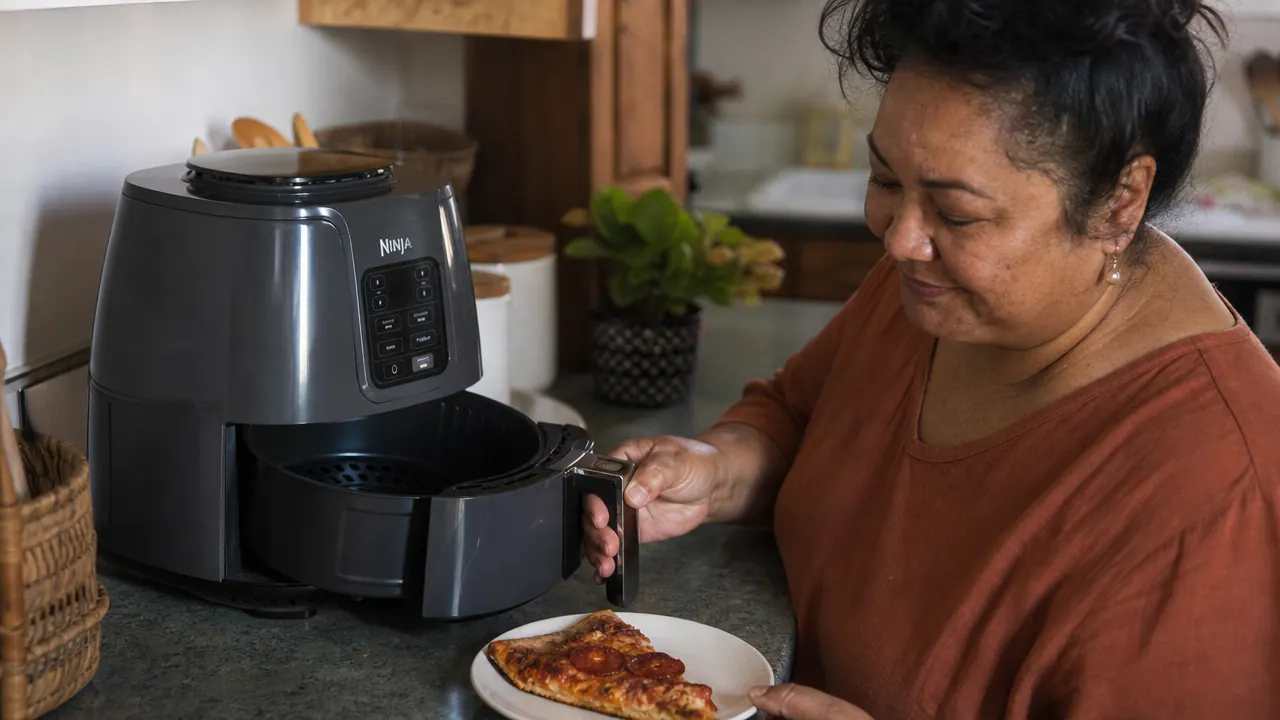
Then I started using my Ninja Air Fryer for reheating, and leftover night became something I actually look forward to. Crispy chicken that tastes like it just came out of the oven. Pizza with a crust that snaps. Roasted vegetables that have not turned to mush. The whole process takes less than five minutes, and cleanup is easy on hands that are tired by the end of the day.
Your leftovers deserve better than the microwave.
The Ninja Air Fryer 4 QT has a dedicated reheat function and a 4-quart basket that fits a full plate of leftovers. It auto shuts off, has cool-touch handles, and weighs just over six pounds, so it is easy to move around a small kitchen. Over 90,000 reviewers give it 4.7 stars.
Amazon Check Today's Price on Amazon →Why the Microwave Makes Leftovers Worse
Microwaves heat food by exciting water molecules, which is fast but creates steam from the inside out. That is great for warming soup. It is terrible for anything with a crust, a crunch, or a crisp exterior, because the steam has nowhere to go except into the food. Your fried chicken loses its coating. Your pizza goes limp. Your roasted vegetables get wet and soft.
A full-size oven fixes the texture problem, but it takes 15 to 20 minutes to preheat, burns a lot of energy for a single serving, and heats up the whole kitchen. That is not practical when you are just feeding yourself or one other person on a Tuesday evening.
The air fryer sits right between those two options. It circulates hot dry air around the food, which crisps the outside without drying out the inside, and it does not need much preheat time. For single-serving reheat jobs, it is faster than the oven and produces far better results than the microwave.
Step 1: Let the Food Come to Room Temperature (Just a Few Minutes)
Pull your leftovers out of the fridge and set them on the counter while you do something else for three to five minutes. You do not need them at full room temperature, but taking the chill off means the food heats more evenly once it goes into the basket. Cold food straight from the fridge can end up hot on the outside and still cool in the middle, especially with thicker cuts of chicken or a dense slice of casserole.
This is the step most people skip, and it makes a noticeable difference. While the food rests on the counter, you can get the air fryer basket ready. No preheating required for reheating jobs, though a quick 60-second preheat at the target temperature can help with things like pizza or fries that benefit from immediate high heat on the first contact.
If you are reheating something delicate like fish, skip the preheat entirely and go straight to a low temperature. The gentler start gives you more control.
Step 2: Arrange Food in a Single Layer With Gaps
Place your food in the basket so pieces are not stacked or touching. The air fryer works by circulating hot air all the way around the food, and it cannot do that if the basket is packed tight. One layer, with small gaps between pieces, is all you need.
For a solo meal this is almost never a problem. The Ninja AF101's 4-quart basket fits two chicken thighs, two slices of pizza, or a full serving of roasted vegetables with room to spare. If you are reheating for two people, you may need to do it in two small batches, but each batch only takes three to five minutes, so it does not add much time.
One layer, small gaps, and a light spritz of oil if the food looks dry. Those three things are what separate a reheated meal that tastes fresh from one that just tastes warmed up.
One optional tip: if your food looks a little dry coming out of the fridge, a very light spritz of cooking spray or a few drops of olive oil brushed on the surface helps the exterior crisp up nicely without making things greasy. You do not need much, just enough to give the hot air something to work with.
Step 3: Set the Right Temperature for What You Are Reheating
This is where a lot of people go wrong. They set the air fryer to whatever temperature they used to cook the food originally, and that is often too high for reheating. The goal when reheating is to warm through without overcooking, so you generally want a temperature that is 25 to 50 degrees lower than the original cook temp.
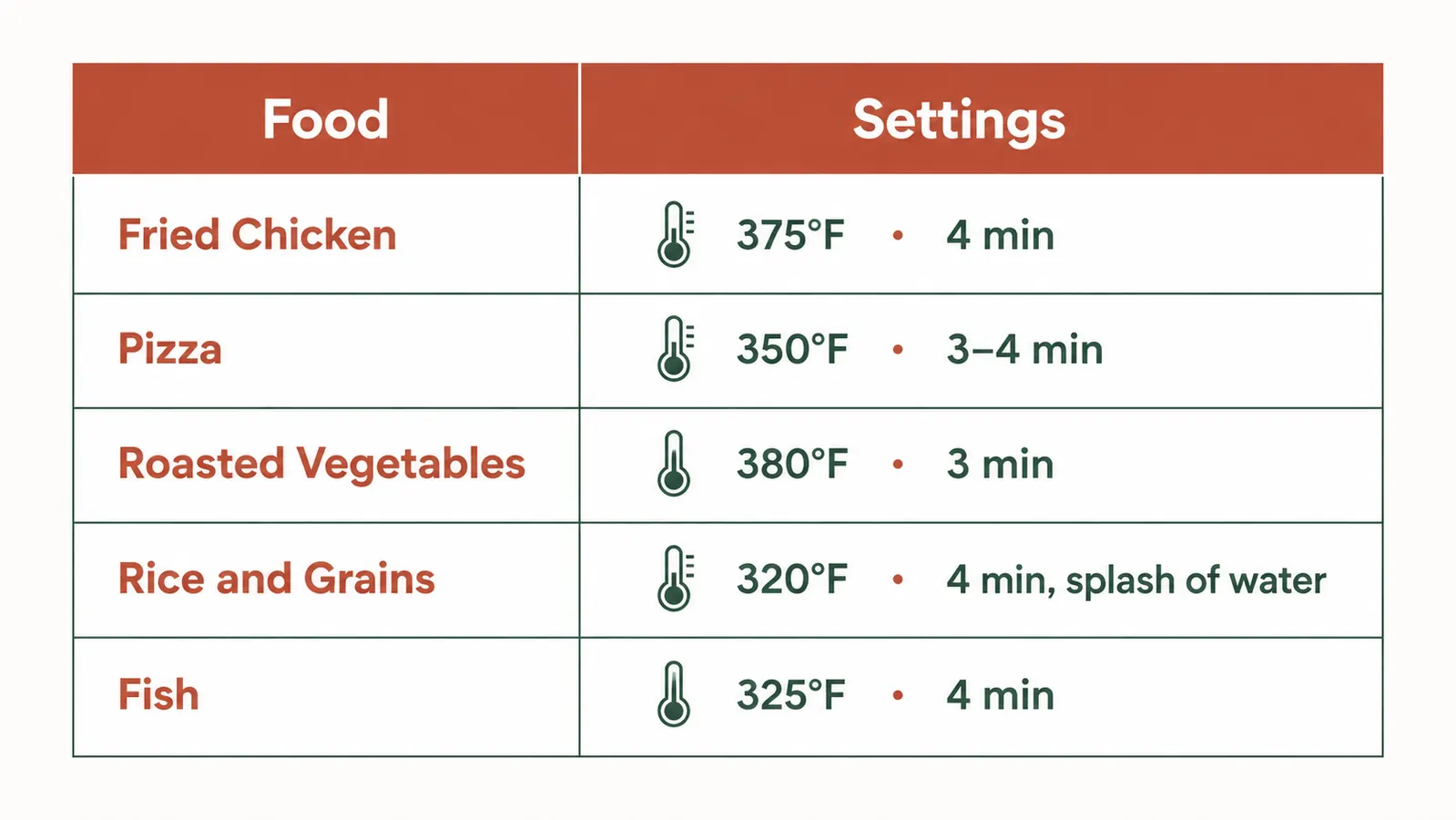
Here are the settings I use most often, based on real trial and error in my own small kitchen:
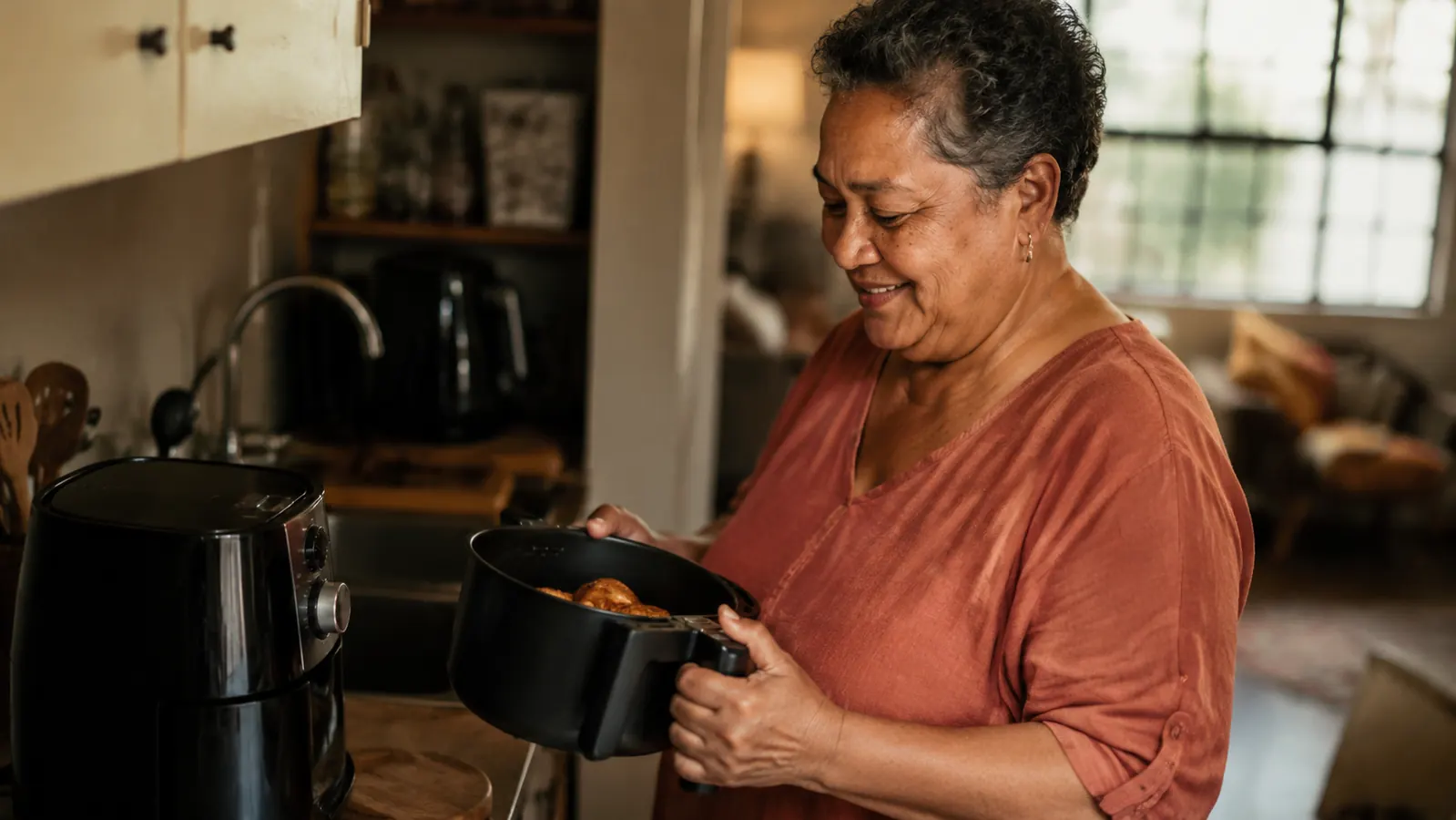
- Fried or roasted chicken: 375 F for 4 minutes, flip halfway. The skin crisps back up without drying the meat.
- Pizza: 350 F for 3 to 4 minutes. Crust goes crisp and cheese melts without burning.
- Roasted vegetables: 380 F for 3 minutes. They caramelize again rather than turning to mush.
- Rice or grain bowls: 320 F for 4 minutes with a small splash of water in the bowl before it goes in. The steam keeps the rice moist.
- Fish: 325 F for 4 minutes. Low and slow protects the texture.
- French fries or onion rings: 400 F for 3 minutes. They need the high heat to crisp back up fast.
These are starting points, not hard rules. Every air fryer runs a little differently, and every portion of food is slightly different in thickness. After you have done this a few times, you will start to know by feel what your particular unit needs.
Step 4: Check and Flip at the Halfway Point
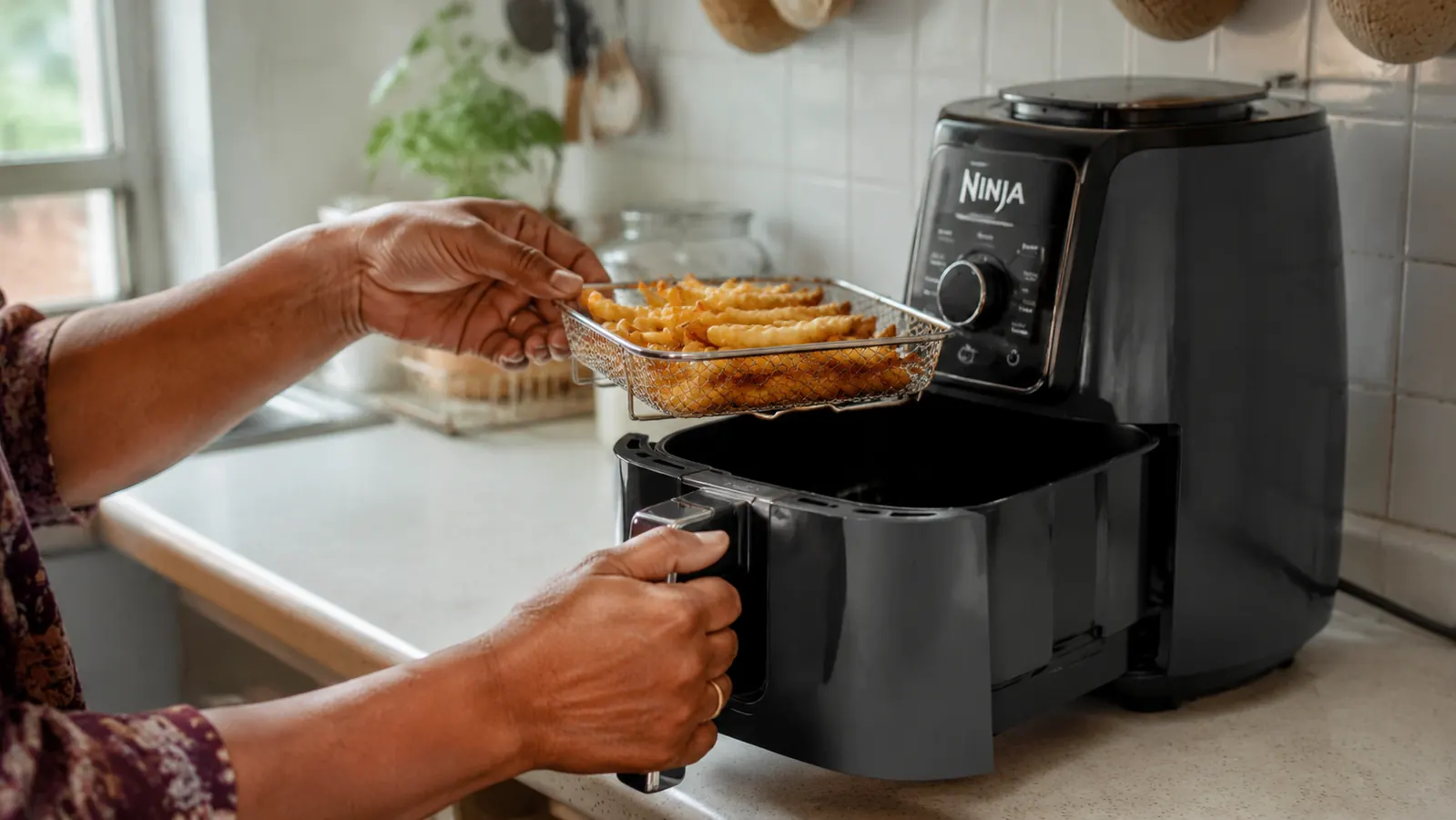
Set your timer for half the total reheat time and open the basket to check. Give the food a shake or flip individual pieces if they are solid enough. This ensures even exposure to the circulating air on all sides.
On the Ninja AF101, the basket slides out easily with one hand, and the handle stays cool to the touch. I appreciate that more than I expected to. When I am tired at the end of a long day, the last thing I want is to be hunting for oven mitts just to check a piece of chicken.
If the food looks close to done at the halfway mark, you can reduce the remaining time by a minute. It is much easier to add 30 more seconds than to rescue something that has gone too far. The auto shut-off on the Ninja means if you get distracted, it will stop on its own rather than burning your food.
Step 5: Let It Rest 60 Seconds Before You Eat
Pull the basket out when the timer finishes and let the food sit for about a minute before you plate it. The interior of the food keeps climbing in temperature for a moment after the heat stops, and this brief rest lets it even out. You get a more consistent temperature from bite to bite, and you avoid burning your mouth on a bite that is much hotter than the rest.
This is a habit from cooking, not just reheating. Small investments of patience like this are what separate a rushed meal from a genuinely comfortable one. The food took time to make the first time. It deserves a proper 60 seconds on the way back.
Plate it, sit down, and enjoy it. That is the whole method.
The Settings Cheat Sheet (Save This)
Below is a quick reference for the foods I reheat most often. These are the settings that work consistently in the Ninja AF101 4 QT. Your unit may need slight adjustments, but these are a reliable starting point.
See the temperature guide image above for a printable version you can keep near your appliance.
What Else Helps
A few things I have learned after months of using this method every week. First, leftovers that were stored in a shallow container rather than stacked deep reheat more evenly because they were already in a thinner layer when they cooled. If you have a choice, spread food out when you store it rather than packing it tall in a narrow container.
Second, anything with a sauce or marinade does better if you wipe off some of the surface liquid before it goes in the basket. Excess liquid turns to steam and softens what you are trying to crisp. A quick pat with a paper towel on saucy chicken thighs makes a real difference.
Third, the Ninja's basket liner inserts (sold separately, fits the AF101) cut cleanup to almost nothing. I line the basket before reheating anything sticky like glazed ribs or teriyaki, and cleanup is lifting out a liner and wiping the basket with a damp cloth. The basket itself is also dishwasher safe, which matters on days when I just do not want to hand wash anything.
If you want more detail on how this air fryer performs day to day, not just for reheating, I wrote up a longer look in my full Ninja Air Fryer review. And if you are still deciding between this and another compact model, the Ninja vs Cosori comparison covers the differences honestly.
Who This Method Is For
This approach works best if you cook in small batches and find yourself with a container of leftovers two or three times a week. It is especially good if you are cooking for one or two and a full oven feels like overkill for a single portion. The Ninja AF101 is compact enough to leave on the counter permanently, which means no lifting a heavy appliance out of a cabinet every time you want to use it. That matters more than I realized before I started taking care of others regularly.
It is also a good fit if you care about not wasting food. When reheated food actually tastes good, you eat it instead of throwing it out. Over a month, that adds up to real savings.
Who Should Skip This Method
If you are regularly reheating large quantities for a family of four or five, a 4-quart basket will have you doing multiple batches every time, and a full oven may actually make more sense for you. The air fryer excels at small portions. It is not the right tool for a family-sized tray of lasagna.
If you mainly reheat soups, stews, and liquids, the microwave or a small saucepan on the stove is still faster and just as good. The air fryer's advantage is restoring texture on solid food. For broths and sauces, it adds no benefit.
If reheated food has been a disappointment, the tool is probably the problem.
The Ninja Air Fryer AF101 runs a 4-in-1 fan system that brings food back to that just-cooked texture in minutes. The basket holds up to 4 quarts, auto shuts off when the timer finishes, and the handle stays cool throughout. It is the one appliance that earns its counter space in a small kitchen every single day.
Amazon Check Today's Price on Amazon →