

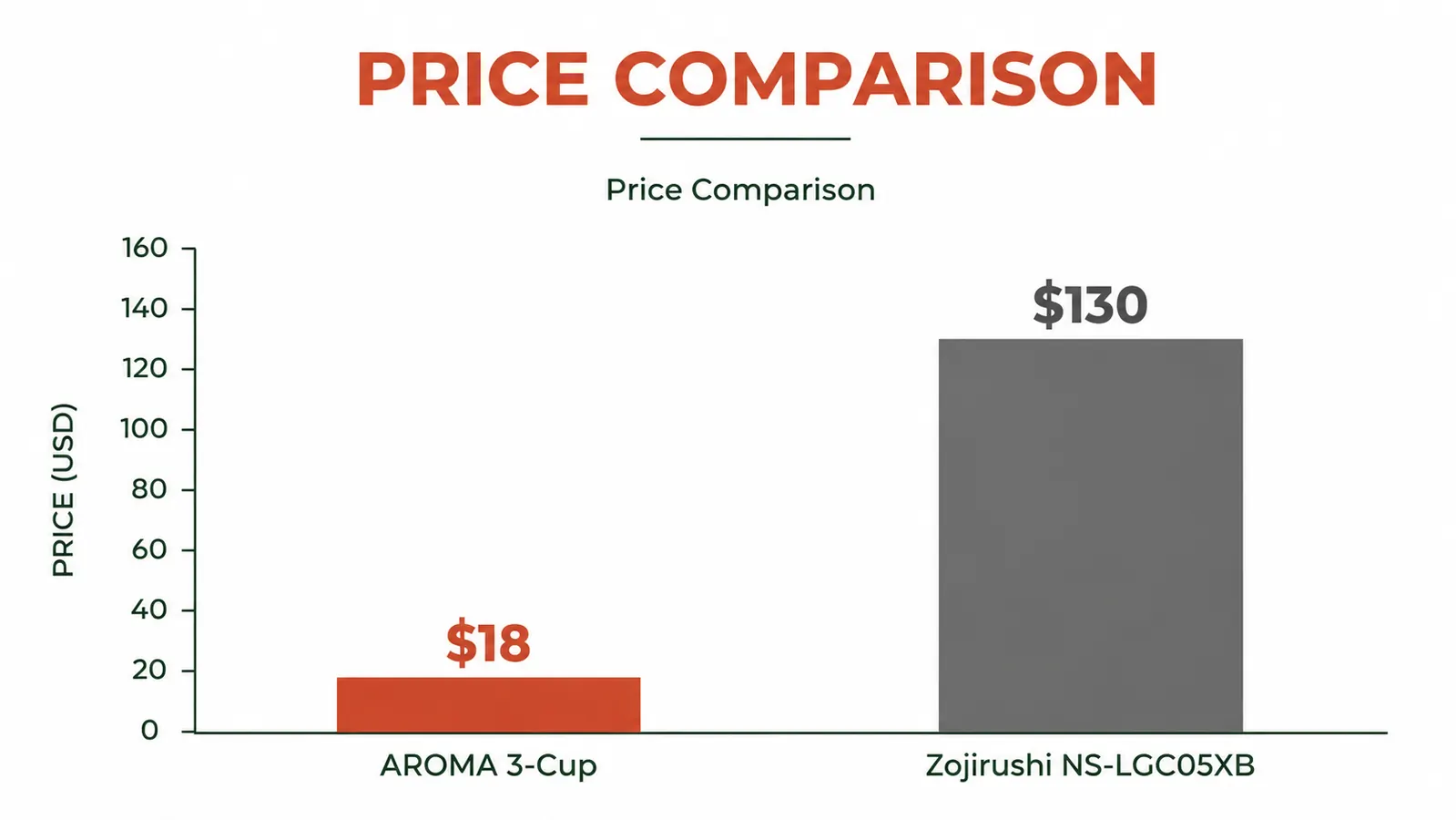
Here is a situation I think you might recognize. You want perfectly cooked rice a few nights a week, maybe for yourself and one other person, without babysitting a pot on the stove. You go looking for a rice cooker and you end up comparing two very different machines: the AROMA 3-Cup rice cooker for around $18, and the Zojirushi NS-LGC05XB for around $130. Both are compact. Both are well-reviewed. But spending seven times more money is a real decision, and I want to help you make it clearly rather than send you down a rabbit hole of spec sheets.
I have been using the Aroma 3-Cup for five months now, cooking rice for my mom and me three or four nights a week. White jasmine rice, brown rice, the occasional mixed grain pot. I also spent time studying the Zojirushi carefully, reading through hundreds of verified buyer reviews, comparing the spec sheets side by side, and talking with people who own both machines. What I found is that the Zojirushi is genuinely excellent. But for most small households cooking everyday meals, it is solving problems you simply do not have.
| Feature | AROMA 3-Cup (ARC-363-1NGB) | Zojirushi NS-LGC05XB |
|---|---|---|
| Price (approx.) | Check today's price on Amazon | Check today's price on Amazon |
| Cooked capacity | 6 cups cooked | 5.5 cups cooked |
| Heating method | Conventional bottom heat element | Induction heating (IH) for all-around even cooking |
| Cook settings | Cook + Keep Warm (2 settings) | 10+ settings including GABA, Umami, Porridge, Sushi |
| Automatic Keep Warm | Yes, activates automatically when rice finishes | Yes, multiple warm modes, holds up to 12 hours |
| Inner pot material | Nonstick aluminum, dishwasher safe | Nonstick stainless steel, hand wash recommended |
| Steam tray included | Yes, included in box | No |
| Weight | 2.2 lbs | 4.6 lbs |
| Footprint | 7.5 x 6.5 inches | 8.5 x 7.0 inches |
Where the Aroma Wins
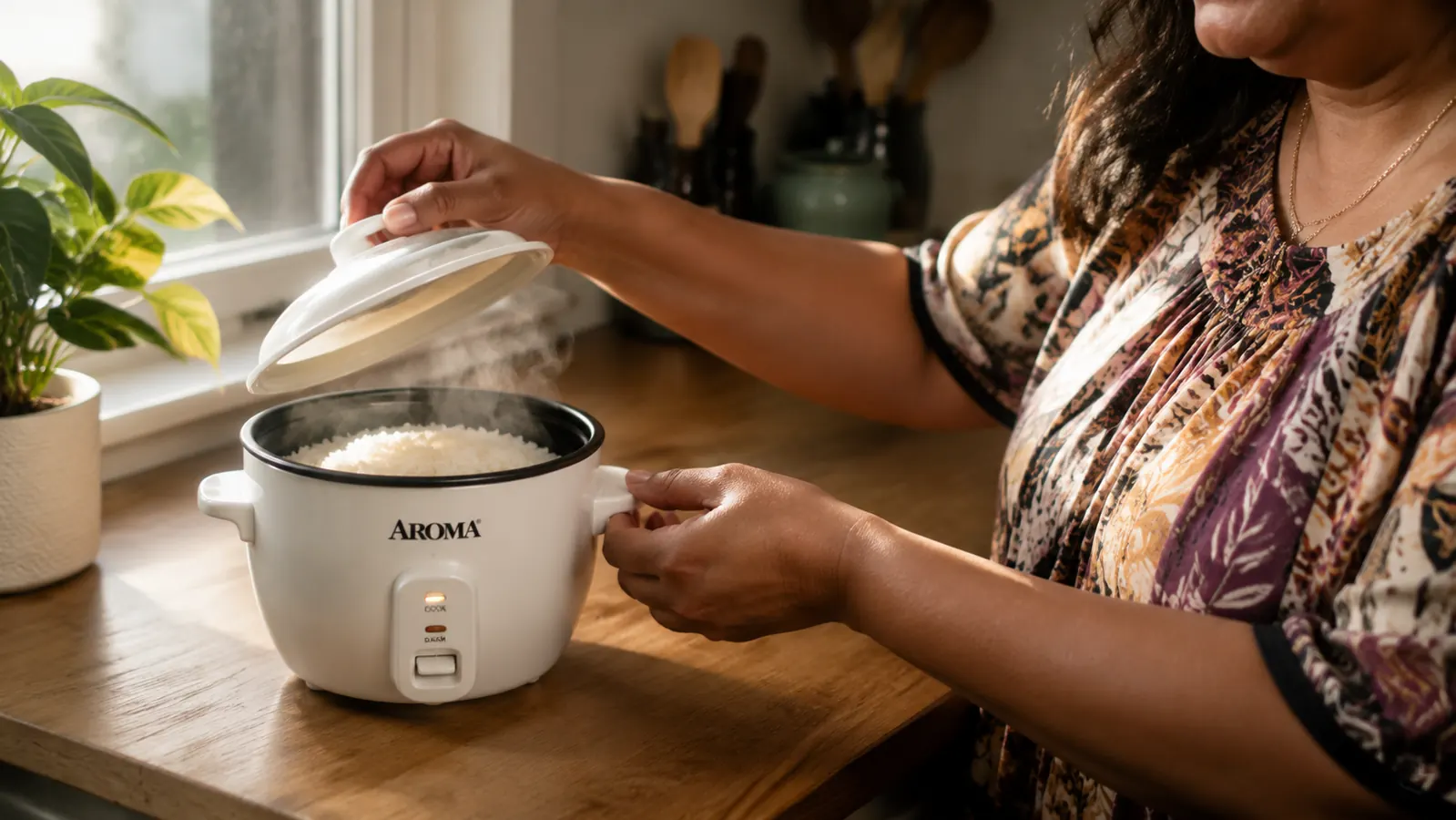
The Aroma 3-Cup is built around one core idea: make rice as simple as possible. You rinse your rice in the inner pot, add water to the fill line marked inside, set the pot back into the cooker, and press the single cook button. That is it. There is no menu to scroll through, no display to read, no preset to select. When the rice finishes, the cooker clicks over to Keep Warm automatically and holds it there until you are ready to serve. For me, that automatic transition is not a small convenience. I am often helping my mom get to her chair or handling something else in the apartment when the cooker finishes, and I never once have to worry that the rice will burn or dry out while I am occupied.
The rice quality is genuinely good for everyday home cooking. White jasmine rice comes out fluffy with grains that separate cleanly from each other. Brown rice takes about 45 minutes at the same water ratio listed in the manual and finishes tender throughout without becoming sticky on the outside or underdone in the center. I have cooked brown rice in the Aroma at least 20 times now and it has come out right every single time. The cooker also includes a steam tray that sits above the rice while it cooks, letting you steam broccoli, sliced carrots, or snap peas at the same time without using a second burner. That steam tray is something the Zojirushi does not include, which is a notable omission at seven times the price.
Cleanup is where the Aroma earns extra loyalty at the end of a tired evening. The inner pot lifts straight out and drops into the dishwasher. The lid wipes clean in seconds. The outside of the machine takes about ten seconds with a damp cloth and it looks new again. After five months of regular use, the nonstick coating on my pot still looks clean with no peeling, no brown staining, and no food sticking as long as I rinse the rice before cooking. The entire machine weighs just over two pounds, which matters more than I expected. Moving the pot from the counter to the sink and back is easy even on days when my hands are tired and my grip is not strong.
The price is what makes the Aroma truly hard to argue against for small households. Eighteen dollars for a machine with over 27,000 Amazon reviews and a 4.5-star rating is not a compromise. It is a value that is difficult to beat at any price point. I have owned this cooker for five months and I have never had a batch of rice fail. Compared to the Zojirushi at $130, you are saving $112 and losing almost nothing that affects the actual rice you eat on a Tuesday night.
If clean rice for two and a clean countertop are all you need, the Aroma is all you need.
The AROMA 3-Cup rice cooker holds a 4.5-star rating across more than 27,000 Amazon reviews. Under $20, includes a steam tray, and the inner pot goes right in the dishwasher.
Amazon Check Today's Price on Amazon →Rinse the rice, fill to the line, press the button. I have done that about 80 times now and the Aroma has not failed me once.
Where the Zojirushi Wins
The Zojirushi NS-LGC05XB uses induction heating rather than a conventional bottom element. What that means in practice is that heat wraps around the entire inner pot rather than radiating upward from a single point below. The result is rice that cooks more evenly from edge to edge and from the bottom layer to the top, with more consistent texture and moisture distribution throughout. This difference is most noticeable with Japanese short-grain rice, where a slightly glossy surface and soft, cohesive texture signal proper cooking. If you prepare short-grain rice regularly, cook for guests where presentation matters, or care deeply about the texture of your rice in the way some people care about the texture of their pasta, the Zojirushi will give you results the Aroma simply cannot match at the same level of precision.
The menu system on the Zojirushi covers genuine cooking functions rather than just variations on a single theme. The GABA setting runs the rice through a germination stage that activates an amino acid with health benefits, which is something brown rice enthusiasts specifically seek out. The Umami setting extends soaking and steaming phases to draw out more depth of flavor from the grain itself. The Porridge setting handles rice congee and oatmeal with a slow, controlled simmer that produces a creamy texture without requiring you to monitor the pot. If you want one appliance that handles rice, breakfast porridge, and slow-cooked congee without pulling out anything else, the Zojirushi covers that range.
Build quality is another place the Zojirushi pulls clearly ahead. The lid seal is noticeably tighter and more substantial than the Aroma's. The stainless steel inner pot feels more durable and has better heat retention after cooking stops. Verified buyers regularly report using their Zojirushi for 12 to 15 years with no issues beyond the occasional inner pot replacement. If you cook rice every single day, two meals a day, and you want a machine you purchase once and forget about for a decade, the Zojirushi's longevity is a real argument in its favor over a long enough time horizon. The Aroma is not poorly built, but it was not designed with 15-year durability as a goal.
The Keep Warm function on the Zojirushi is also superior for longer holds. It maintains rice at serving temperature for up to 12 hours without drying out the texture. If you cook in the morning and serve in the evening, or if you feed people at staggered times throughout the day, the Zojirushi handles that without the rice becoming chalky. The Aroma's Keep Warm works well for an hour or two but starts to dry out the rice if you leave it much longer than that, which is a real limitation if your schedule does not line up with a quick turnaround from cook to table.
What Daily Use Actually Looks Like
With the Aroma, my evening routine is this: I rinse half a cup of dry jasmine rice under the tap for about 30 seconds, pour it into the inner pot, add water to the one-cup line, set the pot into the cooker, and press the button. Then I go get my mom settled, take my shoes off, and start whatever else I am doing. About 20 minutes later I hear a soft click and I know the rice is done and keeping warm. I scoop it into bowls and slide the inner pot into the dishwasher. Start to finish, my active time is probably four minutes.
With the Zojirushi, the process is similar but not identical. You select the appropriate setting from the menu first, which adds a step that some owners find natural and others find fussy depending on how tired they are at the end of a day. The machine runs through a pre-soak phase before it begins cooking, which means rice often takes longer to finish than the Aroma, sometimes 30 to 40 minutes rather than 20 for white rice. The results are worth the extra time if you are cooking premium short-grain rice and you care about the outcome. They are less worth it if you are making side-dish jasmine rice to go with a piece of baked salmon.
Storage is another small daily consideration in a small kitchen. The Aroma takes up about the same footprint as a large coffee mug. It slides easily into a lower cabinet if you need the counter space. The Zojirushi is a bit wider and heavier and is the kind of machine most owners leave out permanently because lifting it in and out is less convenient. If counter space is tight, the Aroma wins that decision without any contest.

Who Should Buy Which
Buy the Aroma 3-Cup if you cook for one or two people on most weeknights, you want rice that is done and warm when you are ready without any setup or decisions, and easy cleanup at the end of a long day matters more to you than precision heat settings. If you have tired hands or wrists, the Aroma's two-pound weight is a genuine day-to-day advantage over the Zojirushi's four-and-a-half pounds. And if keeping your counter uncluttered and spending your food budget on ingredients rather than appliances sounds like common sense to you, the Aroma is the right call. You can read my full long-term review of the Aroma rice cooker for a detailed look at five months of everyday cooking with it before you decide.
Buy the Zojirushi if you are a serious home cook who considers rice a centerpiece dish that deserves real attention to texture and technique, you regularly prepare Japanese short-grain or premium long-grain varieties where even heat distribution changes the outcome, or you want one machine that handles rice, porridge, congee, and specialized cooking functions without reaching for a second pot. It is also worth considering if you plan to cook rice twice a day every day for the next decade and you want a machine that will hold up for all of it. Just go in knowing that you are paying $112 more for precision, range, and longevity. You are not paying for noticeably better-tasting Tuesday night rice over plain jasmine or brown.
If you already have the Aroma and want to get the most out of it, the step-by-step guide to cooking perfect rice covers water ratios for white rice and brown rice, timing for steaming vegetables at the same time, and the simple routine that keeps the inner pot looking clean for the long term.
Simple rice, every night, without a second thought. That is what the Aroma gives you.
4.5 stars and more than 27,000 verified reviews. A dishwasher-safe inner pot and a steam tray included in the box. For cooking for one or two in a small kitchen, the Aroma 3-Cup is genuinely hard to beat at any price.
Amazon Check Today's Price on Amazon →